
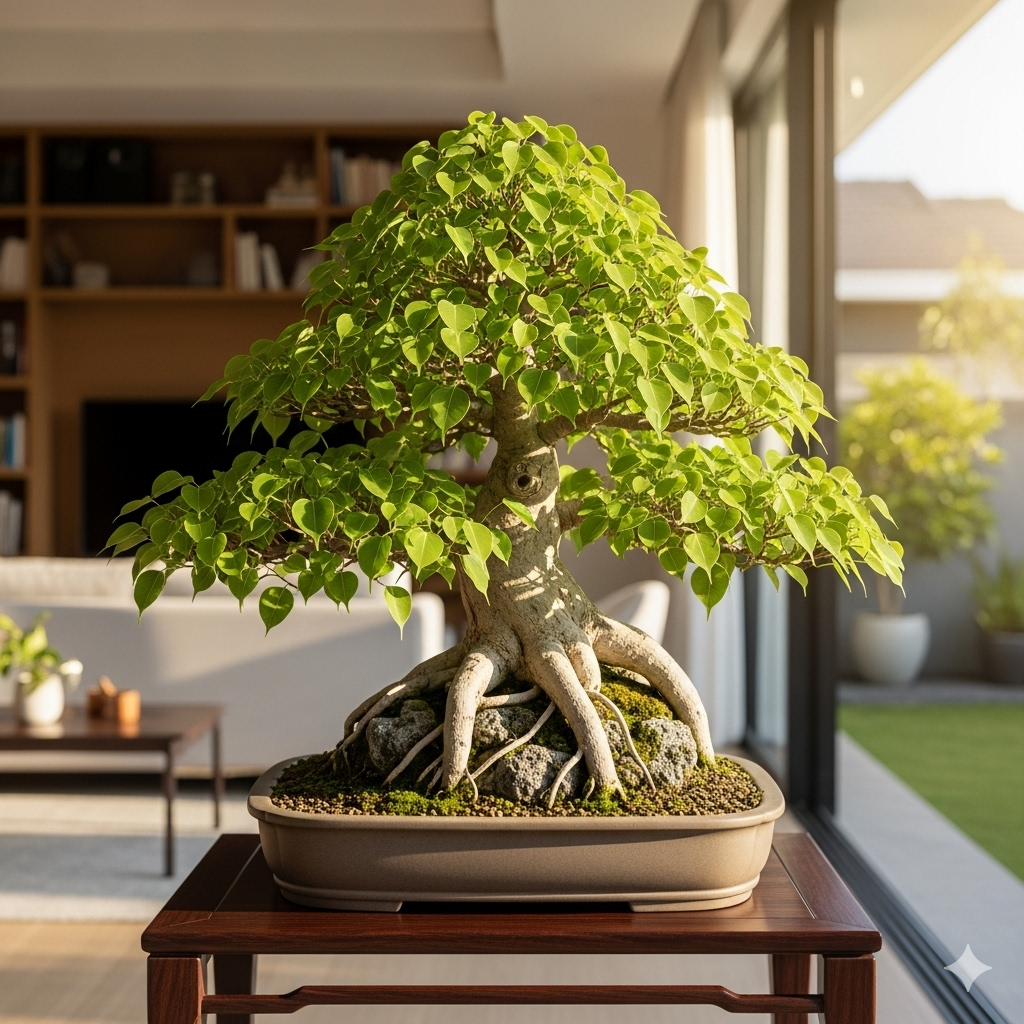
Plants have always been associated with balance, healing, and vitality. Among the many symbolic plants revered across cultures, the Peepal tree (Ficus religiosa) holds a particularly sacred place. Known as the Bodhi tree in Buddhism, under which the Buddha attained enlightenment, the Peepal tree is often regarded as a symbol of wisdom, peace, and spiritual awakening. When cultivated as a bonsai, this powerful tree takes on a new role—bringing harmony and positive energy into homes and workplaces in a compact, graceful form.
The Peepal bonsai combines the strength of ancient symbolism with the beauty of miniature artistry. Beyond its striking appearance, it is believed to radiate calming, purifying energy, making it a meaningful addition to indoor spaces.
The Sacred Symbolism of the Peepal Tree
The Peepal tree has been admired in Hinduism, Buddhism, and Jainism for centuries. In Hindu tradition, it is associated with the gods Vishnu, Shiva, and Brahma, representing life, creation, and sustenance. In Buddhism, it is revered as the Bodhi tree, symbolizing enlightenment, wisdom, and spiritual growth.
When shaped as a bonsai, the Peepal retains this deep spiritual symbolism but becomes more accessible for personal spaces. It reminds us of mindfulness, inner strength, and balance—qualities that are essential for creating harmony in modern living environments.
A Natural Source of Positive Energy
The Peepal bonsai is said to radiate positive vibrations, making it a natural energy cleanser for indoor environments. Its lush foliage symbolizes vitality, while its strong trunk and intricate branches reflect resilience and stability. Having a Peepal bonsai in the home or office is believed to encourage peace of mind, reduce stress, and foster a sense of grounding.
In traditional beliefs, the Peepal tree also carries an aura of protection. It is thought to dispel negativity and invite harmony, making it a plant that not only beautifies a room but also nurtures a calm and balanced atmosphere.
Connection to Health and Well-Being
Like many indoor plants, the Peepal bonsai contributes to better air quality. It releases oxygen, helping to refresh the indoor environment and support respiratory health. Cleaner air naturally enhances focus, relaxation, and energy levels, making daily life more productive and enjoyable.
In addition, caring for a bonsai itself is considered a meditative practice. The act of pruning, watering, and shaping the tree requires patience and mindfulness, offering moments of calm and connection to nature. For those seeking balance in busy lifestyles, tending a Peepal bonsai can become a grounding ritual that restores harmony.
Placement and Feng Shui Benefits
Placement plays an important role in maximizing the benefits of a Peepal bonsai. In Feng Shui, trees with strong energy and symbolic power are recommended for areas associated with growth, prosperity, and relationships.
-
Living room or family spaces: Placing the bonsai in a shared area promotes harmony among household members.
-
Workspaces or study areas: The Peepal bonsai encourages focus, wisdom, and clarity of thought.
-
Meditation corners: Its spiritual associations make it a perfect companion for prayer, meditation, or yoga spaces.
-
Entryways: When placed near the entrance, it symbolizes welcoming positive energy into the home.
Regardless of placement, it is important to keep the bonsai in a spot with sufficient light and good airflow so it thrives, as a healthy plant symbolizes vibrant, flowing energy.
Caring for a Peepal Bonsai
Though it carries deep symbolism, the Peepal bonsai also requires proper care to remain healthy and beautiful. Its resilience makes it suitable for bonsai cultivation, but attention to its needs ensures long-lasting growth.
-
Light: Prefers bright, indirect sunlight. Place near a window with filtered light.
-
Watering: Keep the soil slightly moist but avoid overwatering. Water when the top layer of soil feels dry.
-
Pruning: Regular trimming is needed to maintain its bonsai form and encourage dense foliage.
-
Soil: A well-draining soil mix helps prevent root rot.
-
Humidity: Prefers moderate humidity levels, so occasional misting is beneficial.
With proper care, the Peepal bonsai can live for many years, becoming a cherished companion that grows alongside its caretakers.
A Meaningful Gift of Harmony
Because of its spiritual and symbolic value, the Peepal bonsai makes a thoughtful gift for housewarmings, weddings, or special occasions. It represents blessings of peace, wisdom, and prosperity, offering more than just ornamental beauty. As it continues to grow, it serves as a lasting reminder of good intentions and harmony.
Final Thoughts
The Peepal bonsai is more than an ornamental plant—it is a living symbol of harmony, enlightenment, and positive energy. Rooted in centuries of cultural reverence, it brings the essence of wisdom and spirituality into modern homes in a graceful, compact form. Its presence not only enhances the beauty of interiors but also nurtures peace, vitality, and mindfulness.
By caring for a Peepal bonsai, individuals invite balance and tranquility into their daily lives. Whether placed in a home, office, or meditation space, it serves as a reminder of resilience, patience, and growth. As a symbol of harmony and positive energy, the Peepal bonsai continues to inspire, making it an extraordinary plant for those seeking both beauty and meaning indoors.